

Introduction
As a cat owner, have you ever been left with claw-marks hazarding your skin after a pure-hearted attempt to cuddle your fur-baby? Or sometimes, the cause of your frayed carpets, curtains or couches isn’t always mischievous felines but the consequence of unclipped kitty nails. Managing a cat’s nails is an essential part of grooming that can often be overlooked. Long, sharp nails can lead to various issues, so grooming them is not merely a cosmetic concern but also a crucial health measure.
This post is all about taking the fear and struggle out of a common challenge faced by many cat owners: Trimming your dear kitty’s nails. It’s a task that may seem as daunting as herding cats, but with the right knowledge, technique, and a little bit of patience, it can be as manageable as teaching a cat to use a scratching post (yes, it’s possible). So buckle up cat-lovers, aren’t you excited to learn how to properly trim your cat’s nails and put an end to the reign of their tiny, but mighty claws?
Main Body
Section 1: Understanding the Importance of Nail Trimming
Like humans, cats too have a hard outer layer of their nails and a softer quick beneath, which is abundant in nerves and blood vessels. When the nails grow too long, they can become embedded into the paw-pad, causing inflammation, pain, and sometimes infections. In house-cats, overgrown nails can lead to behavioral issues like increased aggression or anxiety. Thus, learning how to properly trim your cat’s nails becomes essential not just for the safety of you and your family, but also for your cat’s comfort and well-being.
Section 2: Your Guide for Perfect Paws
If you’re a first-time cat owner, all you need is a cat nail trimmer or claw clipper, a good source of light and your love-infused patience.
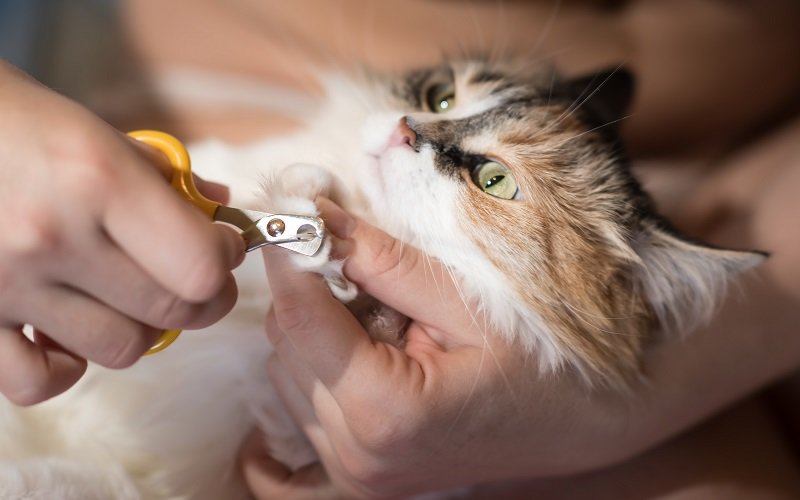
1. Hold your kitty’s paw gently but firmly in your hand and press her toe-pads to reveal the claws.
2. Pay attention to the translucent section and the pink section in her nail. The pink section, known as the quick, should not be trimmed, as that can cause bleeding.
3. Aim your clipper to cut only the transparent section. The cut should be made from top to bottom, not side to side.
4. If your cat pulls away, give her a break and resume after she calms down. Remember, the goal is to make it a positive experience for both you and your cat.
Section 3: Myth-busting Time
A common misconception is that declawing is an easier and permanent solution to manage the challenges of a cat’s nails. Declawing involves an amputation equivalent to removing human fingertips up to the first knuckle, leading to potential long-term physical and psychological harm. It’s seen as inhumane by the American Animal Hospital Association (AAHA) and the ASPCA, among others. We strongly recommend the choice of humane alternatives like regular trimmings, or the use of soft-paws for cats.
Section 4: Real-life Experiences
In my personal experience, our rescue cat Tigger, an eight-year-old chunky Tabby Mainecoon, had his behavioral issues resolved with regular nail trimming. You can also find a variety of customer reviews for cat claw clippers on our website. For instance, “Kitty Nail-Pro” received five-star reviews, with customers praising its easy grip design and a safety feature to avoid over-trimming.
Conclusion
While the idea of trimming your cat’s nails might feel like navigating a minefield, with a little practice and patience, you’ll be as proficient as a professional pet groomer. It’s a simple routine task that’s crucial to maintain your cat’s health and happiness. So, are you ready to embark on your nail trimming adventure and quick-free, peaceful snuggles with your feline companion?
SEO Considerations
Don’t miss out on more posts of our cat-like reflexes blog series where you can find tips from our series on “Surviving the First Year with your Kitten” or our popular guide “The Best Diet for Your Fur Baby”. To further understand the anatomy of your cat’s nails, visit this link to a comprehensive study published in the Journal of Feline Medicine and Surgery.
